Pages

Showing posts with label Babylonian. Show all posts

Monday, 22 April 2024

Pisces Constellation Esoteric Symbology

 The zodiac sign of Pisces (19 February – 20 March) is symbolised by the Fishes.

Pisces occupies a significant place within the wheel of the year, symbolising the transition from winter's quiet introspection to the awakening of spring's vitality. As the twelfth and final sign of the zodiac, Pisces embodies the culmination of a cycle, representing both endings and beginnings.

In the Northern Hemisphere, Pisces aligns with the final weeks of winter, a time when nature begins to stir. It serves as a bridge between the depths of winter's hibernation and the burgeoning life of spring. This period encourages reflection, introspection, and spiritual renewal as we prepare to emerge from the darkness into the light.

Pisces' influence encourages us to delve deep into the recesses of our subconscious, confronting unresolved emotions and embracing the wisdom gained from past experiences. It invites us to surrender to the flow of life, trusting in the unseen currents that guide us toward our true path.

Symbolised by two fish swimming in opposite directions, Pisces embodies duality and the interplay of opposing forces. It reminds us of the delicate balance between the conscious and unconscious mind, the material and spiritual realms, and the individual self and the collective consciousness.

As we swim through the waters of Pisces season, we are called to embrace empathy, compassion, and unconditional love. It is a time for forgiveness and healing. Through acts of kindness and selfless service, we can align with the higher vibrations of Piscean energy, transcending the limitations of the ego and connecting with the divine within ourselves and others.

Pisces heralds the approach of the vernal equinox, a time of rebirth, renewal, and the emergence of new life. It invites us to release the old and make way for the new, trusting in the inherent wisdom of nature's cycles.

As we bid farewell to Pisces and welcome the arrival of spring, we carry with us the lessons learnt and the blessings received during this introspective and transformative time. With hearts open and spirits renewed, we can look forward to the promise of growth, expansion, and infinite possibilities that lie ahead.

Pisces is located in the northern celestial hemisphere between Aquarius to the west and Aries to the east. Pisces is often depicted as two fish tied together by a cord, swimming in opposite directions.

While the astrological sign Pisces per definition runs from elliptical longitude 330° to 0°, this position is now mostly covered by the constellation of Aquarius, due to the precession from when the constellation and the sign coincided. Today, the First Point of Aries, or the vernal equinox is in the Pisces constellation.

There are no prominent stars in the constellation, with the brightest stars being of only fourth magnitude. One star in the constellation, Alpha Piscium, is also known as Alrescha which comes from  Arabic, meaning "the well rope," or "the cord." It is a binary star system, consisting of two stars orbiting each other.

The Pisces constellation contains several deep-sky objects catalogued by Charles Messier, including the spiral galaxies M74 and M77. These galaxies are relatively faint and require a telescope to observe. In the direction of Pisces lies a mysterious gravitational anomaly known as the Great Attractor. It is a gravitational focal point in space that influences the motion of galaxies within our cosmic neighbourhood.

Within the Pisces constellation, there is a dwarf galaxy known as the Pisces Dwarf. It is a satellite galaxy of the Milky Way, located about 80,000 light-years away from Earth. There are two meteor showers associated with Pisces: the Piscids and the Pegasids. These meteor showers occur annually and are visible from Earth during specific times of the year.
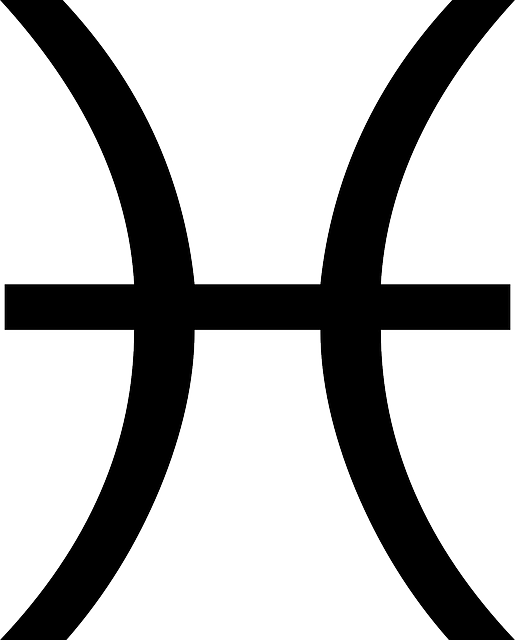
The glyph represents two fish swimming in opposite directions which shows the fluid nature of the sign.


"Pisces" is the Latin word for "Fishes". It is one of the earliest zodiac signs on record, with the two fish appearing as far back as c. 10,000 BCE in India where various images have been found carved into rocks at Ratnagiri, and c. 2300 BCE on an Egyptian coffin lid.

Later the Indus Valley civilisation used fish to symbolise the divine source of life. Fish that resemble the ichthys with little fins or wings can be seen on many Indus Valley seals. They appear to represent the soul of ancestors, connecting the idea of fish with the afterlife and the gods.

This connection is also found in the Nommo, the ancestral spirits of the Dogon who we met briefly in Gemini Myths. The Nommo were described as amphibious fish-like creatures and were depicted with human bodies and a fish-tail. They were the first beings to be created by the sky god Amma, who sacrificed one of them and dismembered his body, scattering the parts around the world.

As mentioned before this was an allegory for the Serpent Bloodline who visited these tribes to impart them with knowledge. When arriving on boats on the horizon, it seemed like they were floating down from the sky, and they had evolved from aquatic apes, and spent a lot of time in the water and on the water in their boats, which is why they are associated with merman and mermaid type creatures. The dismembering of his body parts is an allegory for when our tribes mixed our genes with that of land apes and spread their genes all over the globe.

In Serbia, statues and figurines of river goddesses have been found in a settlement called Lepenski Vir. Dated between 9,500 and 6,000 BCE, it’s described as the first city in Europe which thrived on the banks of the Danube River where the people fished. The egg-shaped statue is called ‘Foremother’ and may represent a primaeval Mother goddess, dating to c. 7,000 BCE. She has a fish-like mouth and stands about half a metre high and was built into the stone floor of a house shrine.

The Piscean is seen as the most balanced of all the signs. This is why the two fishes are often shown in a yin-yang formation. The fish facing upwards away from the ecliptic is swimming towards the heavens or is seeking spiritual illumination. The other fish swims along the ecliptic, concerning itself with material matters.

Pisces is used to represent the Goddess much further back into the past because of its association with the Vesica Piscis. The curved H of the Pisces symbol converts into the Vesica Piscis when the curved sides are crossed to the opposite side of the central arm. Vesica Piscis means ‘bladder of a fish.’ This is derived from the intersection of two circles and represents the joining of two worlds: the divine and the human. The symbol represents the Great Mother goddess. It stands for the yoni, the entrance to the womb, which is also the entrance to the afterlife or spirit world.

Pisces is also sometimes represented as two dolphins, mermaids, whales and other sea mammals, and the dove. Non-animal symbols include wine and the vine. The Pisces being the most watery of all water signs, the sea is its domain.

In esoteric astrology, Venus was considered the ruler of Pisces, and prior to the discovery of Neptune in 1846, Jupiter was said to rule Pisces. Neptune is mostly considered the ruling planet of Pisces today because of its association with the Roman god of water and the sea, Neptune. The detriment, or the sign "opposite" to that which is deemed the ruling planet, is Mercury. Venus is exalted in Pisces, and Mercury falls in Pisces.

Many Christian symbols for Christ use the astrological symbol of Pisces, the fish. The figure Christ himself bears many of the temperaments and personality traits of a Pisces, and is thus considered an archetype of the Piscean. We are currently in the age of Pisces, once this age is over Jesus will no longer be the God of the age. Moreover, the twelve apostles were called the "fishers of men," early Christians called themselves "little fishes," and a code word for Jesus was the Greek word for fish, "Ikhthyes". With this, the start of the age, or the "Great Month of Pisces" is regarded as the beginning of the Christian religion. Saint Peter is recognized as the apostle of the Piscean sign.

Pisces has been called the "dying god," where its sign opposite in the night sky is Virgo, or, the Virgin Mary. When Jesus was asked by his disciples when the next Passover would be, he replied to them:

Behold, when ye are entered into the city, there shall a water bearer pouring out water from a pitcher... follow them into the house where they entereth in.

—Jesus, Luke 22:10

This coincides with the changing of the ages, into the Age of Aquarius, as the personification of the constellation of Aquarius is a water bearer pouring out water from a pitcher, the water representing enlightenment for the people in the new age.

In Greek mythology, Pisces is often associated with the story of Aphrodite and Eros. According to one version of the myth, the goddess Aphrodite and her son Eros were pursued by the monster Typhon. To escape, they transformed into fish and tied themselves together with a cord. Zeus, impressed by their bravery, immortalized them by placing them among the stars as the constellation Pisces.

Typhon, the "father of all monsters" had been sent by Gaia to attack the gods, which led Pan to warn the others before himself changing into a goat-fish and jumping into the Euphrates. A similar myth, one which the fish "Pisces" carry Aphrodite and her son out of danger. Another myth is that an egg fell into the Euphrates river. It was then rolled to the shore by fishes. Doves sat on the egg until it hatched, out from which came Aphrodite. As a sign of gratitude towards the fishes, Aphrodite put the fish into the night sky. Because of these myths, the Pisces constellation was also known as "Venus et Cupido," and "Veneris Mater," the latter being the formal Latin term for mother.

The Greek myth on the origin of the sign of Pisces has been cited as an example of the fables that arose from the original astrological doctrine, and that the original intent of it was afterwards corrupted both by poets and priests.

Later on, the myth evolved again and the Ichthyes were re-imagined as Aphros and Bythos, the fish-tailed Ichthyocentaurs, or sea-centaurs, who brought Aphrodite to shore after she was born from the sea foam.

The ruler of Pisces is Neptune (for Romans) or Poseidon in Greece. Poseidon was originally an earthy fertility god and only later became associated with the sea. His other domains included earthquakes, floods, drought, and horses. Dolphins were his sacred animal and he was depicted with a trident on a chariot pulled by two hippocampi – horses with a fish-tail. He was known as the ‘husband of Earth’, in other words, the consort of the Mother goddess, which gives us a clue as to what happened.

In Mycenaean inscriptions, Poseidon is sometimes referred to in the feminine as Posedeia. She was the personification of the saltwater ocean. Amphitrite gave birth to the seals and dolphins, and ruled the sea with the Nereids – until Zeus gave dominion of the sea to his brother, Poseidon, and she was demoted to wife status.

Nereids belong to the category of Undines, elemental beings, or nymphs, associated predominantly with water. This group encompasses mermaids, naiads, and other female figures. Nereids specifically are sea nymphs often found in the company of Amphitrite and Poseidon, and are commonly depicted alongside dolphins and hippocampi. Generally beneficial to sailors, Nereids contrast with other undines who may be less reliable. Naiads, for example, are freshwater nymphs with a tendency towards jealousy, posing a potential danger. Bound to their specific bodies of water, they perish if their source dries up.

Undines, though human-like in appearance, lack human souls, necessitating marriage to a human for immortality. However, such unions typically end tragically for the mortal partner, as infidelity results in their demise. Committing to an undine lover entails accepting the prospect of a watery fate.

In Babylonian mythology, the constellation Pisces was depicted as a bird and a fish connected by a cord. The bird was known as ‘The Swallow’ and followed the line of the ecliptic, while the fish swam upwards. Together they were known as ‘The Tails’ or the ‘Tail of the Swallow.’ and were associated with the goddess Anunitum, also known as the Lady of the Heaven. She was often depicted as a fish goddess or mermaid and was revered for her protective and nurturing qualities.

The bird symbology comes from a Syrian myth. The story which is much like the Greek one tells of two fish who found an egg in the Euphrates and pushed it onto the land. A dove settled on the egg and it hatched, and out came Astarte, the Syrian version of Ishtar. In another version, the goddess who emerged from the egg was Atargatis.

Atargatis was the Syrian fish goddess of water and fertility and was also often depicted as a mermaid. Fish and doves were her sacred animals, and she had a son called Ichthys who was also a fish. She was worshipped with ecstatic rites by priests who did violence to themselves, like biting or cutting their own arms. They also castrated themselves and dressed as women.

In Hindu mythology, the constellation Pisces is associated with the Matsya Avatar, the first incarnation of the god Vishnu. According to the myth, Vishnu took the form of a fish to save the world from a great flood. He guided King Manu's boat to safety and later retrieved the Vedas, the sacred texts of Hinduism, which had been lost in the flood.

In Chinese mythology, Pisces is often associated with the legend of the Carps Leaping over the Dragon Gate. According to the myth, carp that successfully leap over the Dragon Gate waterfall are transformed into dragons. This symbolizes perseverance, determination, and the attainment of success against all odds.

Various indigenous cultures around the world have their own interpretations of the Pisces constellation. For example, in some Native American traditions, Pisces is associated with fish that bring messages of wisdom and guidance to those who listen.

Pisces is the compassionate mystic and dreamer of the zodiac. Symbolized by the two fish swimming in opposite directions yet bound together, Pisces embodies empathy, intuition, and the transcendence of earthly boundaries. Ruled by Neptune, the planet of spirituality and imagination, Pisces channels the ethereal energies of creativity, intuition, and spiritual awakening.

Pisces symbolizes the journey of spiritual evolution—the dissolution of the ego and the merging of individual consciousness with the divine whole. Like the fish swimming in the boundless ocean of consciousness, Pisces invites us to transcend the limitations of the material world and unite with the infinite cosmic flow.

Corresponding to the human body, Pisces governs the feet, lymphatic system, and pineal gland—areas rich in symbolic significance within esoteric teachings. The feet, symbolic of the connection to the earth and the divine, represent the pathway to spiritual liberation. It is through the feet that we ground ourselves in the present moment, anchoring our consciousness in the physical realm while remaining open to the higher realms of spirit.

The lymphatic system, symbolic of purification and detoxification, represents the cleansing of the body-mind-spirit complex. Like the gentle flow of the ocean tides, the lymphatic system removes toxins and negative energies, purifying the vessel and preparing it for spiritual transformation.

The pineal gland, symbolic of spiritual insight and higher consciousness, represents the gateway to the divine. Located at the centre of the brain, the pineal gland is regarded as the seat of the soul and the connection point between the physical and spiritual dimensions. It is through the activation of the pineal gland that we awaken to our true nature as spiritual beings, transcending the illusions of the material world and uniting with the divine source of all creation.

In esoteric lore, Pisces is associated with the dissolution of ego boundaries and the merging of individual consciousness with the cosmic ocean of consciousness. It is through the energies of Pisces that we surrender to the flow of divine grace, allowing ourselves to be guided by intuition, empathy, and spiritual insight.

Through the energy of Pisces, we can embrace the path of spiritual surrender and divine union, to dissolve the ego's illusions and awaken to the truth. As we honour the esoteric essence of Pisces, we recognize the sacredness of our journey—the eternal quest for unity, love, and transcendence in the boundless ocean of cosmic consciousness.

Saturday, 6 April 2024

Libra Constellation Esoteric Symbology

The zodiac sign of Libra (23 September – 22 October) is symbolised by the Scales.

In Wheel of the Year, Libra is associated with the autumnal equinox, which occurs around September 21st in the northern hemisphere and around March 21st in the southern hemisphere.

The autumnal equinox is a time of balance between light and darkness. It marks the beginning of autumn when the days become shorter and the nights longer. It is a time for giving thanks for the harvest, as well as for preparing for the darker months ahead. It is a time to reflect on balance in our lives and to seek harmony within ourselves and with the world around us.

Libra is located in the southern celestial hemisphere and is best visible in the evening sky during the months of April and May.

The brightest star in the Libra constellation is called Zubeneschamali (also known as Beta Librae), which is a binary star system located approximately 160 light-years away from Earth. Other notable stars in Libra include Zubenelgenubi (Alpha Librae) and Zubenelhakrabi (Gamma Librae).

Libra is often depicted as a set of scales, representing balance and justice. However, in ancient times, it was sometimes considered part of the constellation Scorpius, and the claws of Scorpius were interpreted as the scales of Libra.

Libra is situated along the ecliptic, the apparent path of the Sun across the sky, making it one of the zodiac constellations through which the Sun appears to pass during the course of a year.

While Libra is not particularly rich in deep-sky objects compared to some other constellations, there are a few notable galaxies within its boundaries, including the barred spiral galaxy NGC 5885.


The glyph represents the scales which show the harmonising nature of the sign.

Libra is a masculine sign and is ruled by Venus. It’s balanced and complemented by the opposite sign of Aries, ruled by Mars. The combination of both masculine and feminine in the quality of the sign and its ruler gives Libra an androgynous feel that’s reflected in the mythology. This also reflects the need for balance between opposites, which Libra achieves through relationships.

In ancient Babylonian astrology, the constellation we know as Libra was referred to as ZIB-BA AN-NA, or Zibanu, which translates to ‘the scales’ or the ‘balance of heaven’. Interestingly, it was also known as the Claws of the Scorpion. During the autumn equinox, when the sun rose in Libra, it was designated as the ‘weighing place’, signifying the scales' association with the sun god Utu, or Shamash.

Utu, presiding over justice and truth, symbolized law, order, and the promotion of harmonious living in society. As the embodiment of the sun, he represented the illuminating power of light to unveil truths concealed in darkness. Depicted wielding a serrated saw, Utu's imagery may have denoted retributive justice.

In Babylonian mythology, Utu shared a divine bond with Inanna, his twin sister. Inanna embodied justice alongside love, beauty, fertility, and war. Linked to the planet Venus and its celestial dance with the sun, she presided over fertility rituals and the cycles of death and rebirth, rather than conventional notions of romantic relationships. Inanna's temperament was far from balanced; she famously exhibited fierce behaviour, once even shouting at a mountain out of irritation at its beauty.

In a narrative twist, Inanna's authority over divine justice stemmed from her audacious theft of the mes, sacred powers belonging to the gods. Among these powers were social constructs like law and kingship, as well as abstract concepts such as Truth and Counsel. While Inanna's temperament and actions might seem at odds with the harmonious ideals of Libra, she could perhaps represent its shadow aspect, embodying its complexities and contradictions.

In Greek mythology, the constellation of Libra is sometimes associated with Astraea, the goddess of justice. According to the myth, Astraea was the last of the immortals to live among humans during the Golden Age, a time of perfect justice and peace. As humanity became more corrupt, she ascended to the heavens and became the constellation Virgo. However, her scales remained behind, forming the constellation of Libra, as a symbol of the eternal quest for balance and justice.

In Egyptian mythology, the scales of justice were associated with the goddess Ma'at. Ma'at was responsible for maintaining order, balance, and truth in the universe. Upon death, a person's heart was weighed against the feather of Ma'at to determine their fate in the afterlife. While the scales of justice are not explicitly represented as a constellation in Egyptian mythology, the concept of balance and judgment resonates with the symbolism of Libra.

Maat, embodying truth and justice, held sway over all aspects of Egyptian life, from mundane affairs like politics to personal ethics. Egyptian society mirrored the celestial harmony seen in the stars and the rhythmic patterns of existence, such as the annual flooding of the Nile. While the pharaoh bore the responsibility of upholding equilibrium between heaven and earth, adherence to Maat's laws was expected from everyone.

Upon death, Anubis guided souls to the Hall of Two Truths in the underworld for judgment. Here, the heart underwent scrutiny, weighed against Maat's feather on balanced scales. Should the heart prove light and in balance with the feather, the soul progressed to encounter Osiris. Conversely, a heavy heart led to the grim fate of being consumed by Ammit, a fearsome goddess depicted as part lion, hippopotamus, and crocodile.

Before the heart's weighing, souls were required to recite a 'negative confession,' listing the transgressions they had not committed during their lifetime. This ritual was rooted in Maat's 42 divine principles:

  1. I have not committed sin.
  2. I have not committed robbery with violence.
  3. I have not stolen.
  4. I have not slain men or women.
  5. I have not stolen food.
  6. I have not swindled offerings.
  7. I have not stolen from God/Goddess.
  8. I have not told lies.
  9. I have not carried away food.
  10. I have not cursed.
  11. I have not closed my ears to truth.
  12. I have not committed adultery.
  13. I have not made anyone cry.
  14. I have not felt sorrow without reason.
  15. I have not assaulted anyone.
  16. I am not deceitful.
  17. I have not stolen anyone’s land.
  18. I have not been an eavesdropper.
  19. I have not falsely accused anyone.
  20. I have not been angry without reason.
  21. I have not seduced anyone’s wife.
  22. I have not polluted myself.
  23. I have not terrorized anyone.
  24. I have not disobeyed the Law.
  25. I have not been exclusively angry.
  26. I have not cursed God/Goddess.
  27. I have not behaved with violence.
  28. I have not caused disruption of peace.
  29. I have not acted hastily or without thought.
  30. I have not overstepped my boundaries of concern.
  31. I have not exaggerated my words when speaking.
  32. I have not worked evil.
  33. I have not used evil thoughts, words or deeds.
  34. I have not polluted the water.
  35. I have not spoken angrily or arrogantly.
  36. I have not cursed anyone in thought, word or deeds.
  37. I have not placed myself on a pedestal.
  38. I have not stolen what belongs to God/Goddess.
  39. I have not stolen from or disrespected the deceased.
  40. I have not taken food from a child.
  41. I have not acted with insolence.
  42. I have not destroyed property belonging to God/Goddess.
Maat symbolized more than mere justice; she governed the stars, seasons, and moral fibre of society. Daily life revolved around her ethical precepts, ensuring both cosmic and social harmony. The essence of Maat's concept echoes across cultures, akin to the Taoist notion of the Tao or the Way of Heaven, as well as the concepts of dharma in Buddhism and Hinduism all of which originated in the teachings from the Serpent Bloodline.

In Indian astrology, the constellation of Libra is associated with the nakshatra (lunar mansion) called Vishakha. Vishakha is represented by a forked instrument or a decorated gateway, symbolizing a journey towards higher consciousness or spiritual growth. The story associated with Vishakha involves the divine beings Indra and Agni, who sought the help of the sage Utathya to create a child who could defeat their enemy, the demon Vritra. This story emphasizes themes of collaboration, balance, and overcoming obstacles.

Libra is the harmonious diplomat and seeker of balance. Symbolised by the scales, Libra embodies justice, partnership, and aesthetic beauty. Ruled by Venus, the planet of love and harmony, Libra channels the grace and refinement needed to navigate the complexities of human relationships and social interactions.

Libra symbolises the quest for equilibrium—the integration of opposing forces within the individual and the collective. Like the scales weighing the virtues of light and shadow, Libra invites us to find harmony within ourselves and in our interactions with others.

Corresponding to the human body, Libra governs the kidneys, lumbar region, and lower back—areas rich in symbolic significance within esoteric teachings. The kidneys serve as the filtration system of the body, purifying the blood and regulating fluid balance. It is through the kidneys that we release toxins and maintain the body's internal equilibrium.

The lumbar region and lower back, symbolic of support and stability, represent the foundation upon which we stand tall and navigate the world. Like the scales of Libra, the lumbar spine embodies the need for balance and alignment, both physically and energetically. It is here that we confront issues of self-worth, personal power, and the balance of give and take in our relationships.

In esoteric lore, the kidneys are regarded as the seat of fear and insecurity—the emotional residues that block the flow of love and abundance in our lives. It is through the process of self-awareness and healing that we release these blockages, restoring harmony and balance to the body-mind-spirit complex.

Through the energy of Libra, we can embrace the path of reconciliation and cooperation, seek harmony within ourselves and in our interactions with others, and honour the divine beauty that resides in all beings. As we honour the esoteric essence of Libra, we recognize the sacredness of balance—the delicate dance of light and shadow, yin and yang, that weaves the fabric of existence and guides us on our journey toward wholeness and illumination.

Thursday, 28 March 2024

Gemini Constellation Esoteric Symbology

The zodiac sign of Gemini (21 May – 20 June) is symbolised by the Twins.

Gemini aligns with the period between Beltane and Litha, marking the transition from the fertility and celebration of Beltane to the peak of summer at the summer solstice (Litha). As the days grow longer and warmer, Gemini embodies the energy of movement, communication, and social interaction.

The two brightest stars in Gemini, Castor and Pollux, are among the brightest in the night sky. Pollux, the brighter of the two, is actually an orange giant star, while Castor is a multiple-star system composed of six individual stars.

Gemini is most prominently visible in the northern hemisphere during the winter months, reaching its highest point in the sky around midnight in January.

The Geminid meteor shower, one of the most reliable and active meteor showers of the year, occurs annually in mid-December. The meteors appear to radiate from the constellation of Gemini.

In ancient times, the appearance of Gemini in the night sky marked the beginning of the winter solstice, a significant event in many cultures and calendars.


The glyph represents the Roman numeral for two which shows the dual nature of the sign.

The constellation of Gemini, also known as the Twins, has inspired myths and legends across different cultures throughout history. 

Perhaps the most famous myth associated with Gemini comes from Greek mythology, where the constellation represents the twin brothers Castor and Pollux. According to the myth, Castor and Pollux were born from the union of Leda, Queen of Sparta, and Zeus, who appeared to her in the form of a swan. Castor was mortal, while Pollux was immortal. They were known for their bravery and skill in battle, and after Castor's death, Pollux asked Zeus to let him share his immortality with his twin. As a result, the two were placed in the heavens as the constellation Gemini, where they are depicted as holding hands.

In Norse mythology, the constellation of Gemini is associated with the story of the inseparable twins, Hjuki and Bil. These siblings were tasked with carrying a pole with buckets of water from the well of Mimir. However, they were abducted by the moon god Mani and placed in the sky as the stars of Gemini, where they are forever chasing the moon across the heavens.

In Babylonian mythology, the constellation of Gemini was associated with the story of the great twin gods, Lugalirra and Meslamtaea. These twins were seen as protectors of the heavens and were often depicted holding hands. They were believed to bring balance and harmony to the world and were honoured in rituals and ceremonies.

The Sumerian mythology of Enki and Enlil, often regarded as twin brothers or close siblings, bears intriguing parallels with the constellation of Gemini. Enki, also known as Ea, was the god of wisdom, water, and magic, while Enlil was the god of wind, air, and storms. Their relationship was complex, marked by both cooperation and rivalry, reflecting the dualistic nature often associated with twins.

Enki and Enlil were born to different mothers but shared the same father, Anu, the god of the heavens. This familial connection mirrors the notion of twins being born from the same origin, yet possessing distinct qualities and domains of influence.

The constellation of Gemini, represented by the Twins, reflects the duality inherent in the relationship between Enki and Enlil. Just as the twins in the sky are depicted as holding hands or facing each other, Enki and Enlil were often depicted as complementary forces, each contributing to the balance and harmony of the cosmos.

The twin symbolism also shows up in the twin pillars of Hercules which stood at the entrance to the Strait of Gibraltar and guarded the passage into the unknown beyond. Also the twin pillars of Boaz and Jachin can be seen on the High Priestess tarot card where the Papess sits at the entrance to the sacred realm.

Twin pillars represent the opposites of creation and are sometimes shown with a third pillar that stands for the unification of those opposites. That union is found within the human heart and mind – in the magickian standing between the pillars – connecting heaven and earth.

The figure of the magickian is reflected in Mercury, the ruler of Gemini. Mercury has a dual nature with Hermes, who was the only being who could go down into the underworld and return without paying a price. Hermes is a guide to souls and bringer of inspiration. He’s the god of crossroads and passageways, bridging the conscious and unconscious worlds.

Hermes is the god of alchemy and magic, a transgressor of boundaries and agent of chaos. But he’s also the means through which the opposites are balanced, contained and healed. Long before the Greeks imagined Hermes with his caduceus entwined by twin serpents, the goddess cults embodied the duality of life within one image: the Goddess herself.

During the Age of Gemini, starting c. 6,500 BCE, there was an abundance of double-headed and twin goddesses. But one of the oldest double goddess figures was found at Avdeevo in Russia. It was carved by mammoth hunters c. 20,000 BCE and shows two Venus figures back to back, shaped to fit together with one figure upside down. Perhaps the one facing down represents death, while the other stands for life.

More twin goddess figures were found at Çatal Höyük, c. 7,500 BCE. Some of the figures are like Siamese twins, while others show one woman with two heads. Many have bird-like features or are marked with patterns of chevrons, as seen on the bizarre disc-shaped figures found in Kültepe, dated to c. 3,000 BCE. The twin heads look like mushrooms, but they reflect the local landscape of Cappadocia with its ‘fairy chimneys.’

The double goddess figures represent the dual principle of life and death, the cycles of nature, and perhaps a light and a dark goddess contained within one. Later these two-headed figures were split into two goddesses that represent the dual principles, still related but now separate.

For example, Demeter and Persephone were worshipped together as ‘the Two Goddesses’ at Eleusis, and stood for winter and spring, death and rebirth. We see a similar arrangement with the sisters Inanna and Ereshkigal in Sumer, the light and dark goddesses who represent life and death. Inanna undergoes a descent into her sister’s realm in the underworld in order to renew the life force.

Another symbol related to the goddess cults is the double-headed axe which symbolises duality and unity in one. Also called the Labrys, from the Lydian word for axe, and the root of the word labyrinth. As a symbol of the goddess, it’s usually shown held by women in the art of the Minoan religion. The blades were often curved to resemble the crescent moon in its waxing and waning phases. So the double-headed axe represents the marriage of opposites and the cycles of time within eternity.

In Egyptian astrology, the Gemini constellation was called the ‘Two Stars’ or ‘Pimahi,’ which means ‘the United.’ The Dendera zodiac depicts the sign as a man and a woman, symbolising duality, but they’re holding hands so the opposites are united. This idea is also found in the Sed Festival where the symbolic death and rebirth of the pharaoh was acted out in a shamanic ritual that included a document called ‘the Secret of the Two Partners.’

The Sed Festival was a way to renew the pharaoh’s power and right to rule. He would descend into the underworld and become one with Osiris, the god of the dead, before returning to the living. The pharaoh was identified with Horus while alive, but Horus was also in constant battle with Seth, who killed Osiris. In the festival, the pharaoh received the secret knowledge that enabled him to overcome the duality between Horus and Seth, and was then known as ‘The Two Lords.’

In astrology, Gemini is the third sign of the zodiac. Gemini is the mercurial messenger of the cosmos, weaving threads of communication, intellect, and adaptability. Symbolized by the twins, Gemini embodies duality and versatility, reflecting the multifaceted nature of human consciousness. Ruled by Mercury, the planet of thought and expression, Gemini channels the swift currents of mental agility and linguistic prowess.

Gemini holds a deeper esoteric significance. At its core, Gemini symbolizes the interplay of opposites—the dance of light and shadow, yin and yang, masculine and feminine. Within this dynamic tension lies the potential for integration and transcendence, as the individual navigates the polarities of existence with grace and insight.

Corresponding to the human body, Gemini governs the arms, hands, and lungs—an area of profound importance in esoteric philosophy. The arms and hands are instruments of expression and connection, enabling us to interact with the world and manifest our intentions. Through gesture and touch, we bridge the gap between inner thought and outer reality, shaping our experience with every action.

In esoteric teachings, the lungs are often associated with the breath of life—the sacred rhythm that sustains our physical existence and links us to the cosmic pulse of creation. It is through the breath that we attune ourselves to the flow of universal energy, harmonizing mind, body, and spirit in a seamless symphony of being.

Like the twins of Gemini, the arms and lungs symbolize the duality of existence—the perpetual dance of giving and receiving, action and reflection. Through the energy of Gemini, we embrace the fluidity of change and explore the complexities of life with curiosity and adaptability.

As we honour the esoteric essence of Gemini, we recognize the inherent unity underlying apparent diversity—the interconnectedness of all things in existence. In embracing the dynamic interplay of opposites, we discover the sacred truth that within every contradiction lies the seed of integration, and within every duality, the promise of wholeness.